Gary Krause Landscaping

Services

Main Menus


Irrigation News


Smart Products

Smart controllers like the rain Bird ESP-SMT an affordable weather based control for the home owner


Current Design News


Designing your landscape is afforadble

Our profesional designs casn be very helpful when completing the landscape yourself or contract the work with us and the design is free


Sustainable News


Synthectic Turf

Synthectic turf is a great alternet lawn for lowering green house gasses and conserving water. Our XeriTurf™ does just that and looks like the 'real thing'


Our Services


  Site Development

This is something you should not over look before you start doing your landscape. You need to take a close look at the rough grade and make sure that it is draining away from the building. Also important is your the condition of the soil and how much additional or replacement soil you will need to provide a good growing environment for your plants and turf. Poor soil is why most of the time plants don't do well. The rough grade determines how your finish grade will lay out. If you have a large area to grade you should use a laser level / transit ( they are for rent at most equipment rental places ) to make sure the grade is set for drainage away from your house and other buildings. Now you can determine how much "fill 'dirt" will be needed and about how much topsoil you will need, allow for at least 6" of topsoil. Here is a formula for determining the quantity of soil - width x length x depth. So if you had a area of 100' x 50 ' and needed 6" of top soil, the equation would be 100 x 50 x .5 divided by 27 (sq. ft. in a cubic yard ). That will give you your total cubic yards of soil.

IRRIGATION DESIGN

The first thing you need to do before you can install your new irrigation system is create a design and materials list. This is usually required for most types of irrigation systems. The second step is to do a take-off (materials list) from your plan. You can learn about this and how to professionally install your irrigation by going ( clicking ) to the irrigation tutorial at: http://www.JessStryker.com/install.htm

Landscape Design and Plan

Far too often homeowners begin landscaping without a plan. They plant a few shade trees here and there and evergreen shrubs around the house's foundation. This haphazard approach rarely looks good, often does not fit in with the family's activities, and can cost more than well planned landscape.

Careful landscape planning can increase your family's enjoyment of your property and add significantly to the value of your home. Most important, an unorganized planting can increase the time and money needed to maintain the plants.

Here are a few tips for developing your plan:

Consider your landscape an outdoor extension of your home. Be sure to look at the view from the windows in each room in your home.
Walk over the property and note both good and bad features of the landscape.
Consider the location of walks, drives, utilities and existing plants.
Look for good views you wish to keep, as well as bad views you would prefer to hide.
Examine how the sun and wind strike the house and decide whether you wish to modify these.
Look for ways to increase privacy in certain areas of your landscape.
Look at the way the sun moves across your property. This too, will affect your plans.
Once you have identified the major features of the yard, you are ready to put your ideas on paper by making a plan.

To place ornamental plants properly, you need a scale drawing that will provide a bird's-eye view of your property. It should accurately locate the major features of the landscape. Measure as accurately as possible using graph paper. If a surveyor's plan is available, it might be a helpful reference. Some of the items that should be part of the plan are:
Property lines.

  •  The house, drives, walks and fences.
  •  Utility poles, lines and meters.
  •  Underground utilities, pipes or the septic system
  •  Compass directions
  •  The roof overhang, water spigots, windows and doors.
  • All existing features should be located and recorded.

Once the plan is complete, it is time to select the plants. Select plants for the characteristics you need to meet the goals of your plan. Ornamental characteristics should be secondary to function. Make sure the plants selected fit the environmental conditions you have identified as existing on the site. Trees should not interfere with overhead or underground utilities, and all plants should be planted where they'll have proper sun, good soil, water and adequate space to develop .The budget amount that an owner chooses to invest in landscaping varies greatly, depending upon the existing material already present, size of lot, neighborhood value, their own aspirations and concerns, and their immediate budget.

As a rule of thumb I suggest that an owner budget 5-10 percent of the value of the property. With a good design, that amount of investment could increase the value of the property up to the 15-25 percent range. More than that might be justified if the owner is looking for a posh look, but wouldn't be justified by economics.

Because of the effort and cost of going through the construction process a less amount might, or might not be, efficient. Design fees might range from 6% to 11% of cost of construction, depending. The larger the project, the lower the design fee. National average fee for landscape architects is about $105 per hour. [ASLA published survey "Map of the Territory"] Starting fees might be around $50 an hour for someone with less training or experience.

Based upon my experience, I believe that the relative value of a more experienced opinion increases exponentially. Twice the fee might be worth 10 times as much in actual value, when making recommendations on such a significant investment.

A one or two hour consultation might be worthwhile for the average 1/4 acre parcel. More time than that might not be economical. A developed design might take 5-8 hours, and 12-15 hours (or more) for complete working drawings, for an upscale residence.

There are actually three landscape professional that should be considered. A Landscape Architect to assess the design, a Licensed Landscape Contractor to estimate the cost and a trained consulting Arborist to inspect for hazard trees.

Landscape Development Services

Once you have the Design completed estimates can be submitted for the features you want completed. Our landscapes construction services include:

  • Hardscape - patios, walk ways, pavers, stamped and colored concrete.
  • Water Features - Ponds, waterfalls, koi ponds, streams and fountains.
  • Outdoor lighting - featuring low voltage, LED rope lighting, pathway and up lights
  • Retaining walls - Cultured stone block, dry stack natural rock, Vegetative
  • Drainage systems - French drains, Channel Drains, Curtian Drains and Bio swells
  • Smart Water Irrigation Systems - ET controllers, subsurface drip, water efficient rotors and sprays
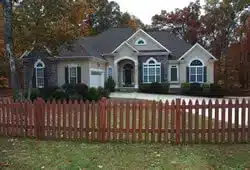
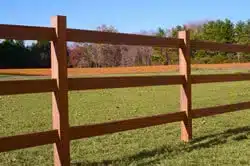
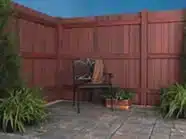
  • Landscape Structures - Pergolas, Arbors, Fences, Decks, Green houses, Gazebos and Garden Sheds